Showing posts with label Wole Soyinka. Show all posts

Thursday, 18 October 2012

The Voice Diary: October 18, 2012


Today, there were three main events: the public presentation of Port Harcourt as the UNESCO World Book Capital, 2014; a "Role Model Reads to Children" event where Dame Alice Lawrence Nemi, the Honourable Commissioner for Education, Rivers State read to children;  and a book signing session. All events were open to the public. The first, that seemed to be the highlight of the day was the official presentation of Port Harcourt as the UNESCO World Book Capital City, 2014. In attendance were the Nobel Laureate for Literature, Professor Wole Soyinka; the Commissioner for Information, Rivers State, Mrs. Ibim Semenitari who represented the Governor of Rivers State, HE Governor Rotimi Amaechi; the Country Representative of UNESCO, Dr Joseph Ngo who represented Director General of UNESCO, Irina Bokova. Seated also were the guest writers for the Garden City Literary Festival, Doreen Baingana, Veronique Tadjo and Chibundu Onuzo. Also seated were writers from the city of Port Harcourt, Igoni Barrett, Chief Elechi Amadi, and Pa Gabriel Okara. 

The event which was co-hosted by Who Wants to Be a Millionaire host, Frank Edoho opened with music from the Rivers States Schools Orchestra. The group of young children also led the audience to sing the National Anthem, which seemed to take on a new meaning, as the second stanza ended "...Great lofty heights attain, to build a nation where peace and justice shall reign."

Throughout the event, it seemed that every speaker focused on how as a country, we can attain lofty heights by supporting the ideas that literature carries. Koko Kalango, the Festival Director gave the welcome speech; she talked about the motive behind the title of this year's festival "The broad theme is interesting because it allows examine the work of women who  are operating in the literary space- writers, publishers, book sellers, literary critics. We will also be looking at what women write about and how relevant female writing is to the modern world, also how women are portrayed in literature."

She emphasised the importance of reading to thinking, to the growth of any society. "A reading people is a thinking people. In a reading society, thinking society, when we see a broken down fuel tanker, we do not go there and take our buckets to fetch petrol to sell for a little money. A thinking person knows that this is a dangerous thing to do as a single match can set a blaze that can kill dozens of people in minutes." She ended her address by welcoming everyone to the Garden City Literary Festival. 

This was followed by the Governor's welcome address presented by Mrs. Ibim Semenitari who lauded the activities of the Rainbow Book Club, as a strategic partnership with the state government in shining the light of enlightenment on the darkness of ignorance in the state. She espoused the potentials that Port Harcourt held being the UNESCO World Book Capital City, 2014, and said that the state would support in the activities.  "Let me on that note welcome you to the beautiful city of Port Harcourt and to the city of Rivers, to a state that is full of possibilities," she said, concluding the Governor's address.

The Director General of UNESCO, Irina Bokova was represented by the country rep, Dr Joseph Ngu. He lauded the work of the Rainbow Book Club as being in alignment with UNESCO's work. He said "In April 2013, Port Harcourt would be the first African city to serve as the UNESCO World Book Capital City. Books are transmitters of knowledge. They promote mutual understanding and help fight ignorance. That's why UNESCO wants to help combat illiteracy. This is why UNESCO is engaged as the lead agency for the global education for all women... With Port Harcourt as world Book capital in 2012, Africa will be able to share its vision of books with the world. We can also address the many challenges encountered by the national stakeholders. The stakes are high and we know that much has to be done, to ensure its success. But rest assured that UNESCO will continue to work with all the parties concerned. Thank you for your attention." 

There was an interlude to the speeches with Pa Okara who read his poem "The Call of the River Nun."

Professor Wole Soyinka took to the podium to give his speech, which he drew largely from social realities, happenings in the world of science and poetry. It was an exercise in decoding the coded language of science and transmitting it in the language that we all understood. He commended the Rainbow Book Club's work, as a legacy, a war of the forces of light against the forces of darkness. He commented on the Aluu incident "worse of all is that it took place in front of people who watched. Silent participants...I believe quite frankly that this country is at war: between the intellects and against the forces of reprobate thinking." 

It is in fact a fight for our humanity, he says "If we surrender to these banal forces in the society, we cease to be human beings. All organisations that wage war against enlightenment wage war, not against the state, but against humanity itself. We have the responsibility to support and sustain such efforts, and that makes RBC an ally organisation. Despite the horrors that surround us, we are very much alive, very much productive. It is an internal and external message, we must continue to preach to our children if we have any hope at all and any faith in our humanity." On Port-Harcourt's selection as the World Book Capital City, he said "This is an honour, not only to the nation but to the African continent. This is recognition that something is going right in Nigeria despite negativity. "

The logo for Port-Harcourt as the World Book Capital, 2014 was was unveiled by writers of Port-Harcourt; Wole Soyinka and his wife, Mrs Folake Soyinka, Mrs Ibim Semenitari and the invited writers.  

Dr Obari Gomba reviewed the book Nigerian Literature: Coat of Many Colours. He had a lot to say, here is a summary "Mrs Kalango's book has a colourful front cover with fourteen pictures of Nigerian writers. Soyinka's photo is the biggest. Does it surprise you? There are other 36 writers on the back cover. They have all added value to the book, period. If you envy them with a bias, then run for office in the next elections. Fifty Nigerian authors are listed. There are fifteen women. This is less than the 35% affirmative action for women; it calls more women to write...The scope of the book is impressive and covers all the generations of Nigerian writers. Many young writers are represented. That is not too many to sing the success of our generation. We have people who have done two, three works and are listed here. It is good that Ms. Kalango has not fallen in the class that says that wait for us until we are grey." 

The event came to a close with the Vote of Thanks delivered by Chief Elechi Amadi.  Copies of the book were given to members of the audience, who hurried to some of the writers who were around for pictures and autographs.

Tuesday, 31 July 2012

GCLF 2012: Books of the Festival

Death and the King’s Horseman, by Wole Soyinka
Elesin Oba, the King's Horseman, has a single destiny. When the King dies, he must commit ritual suicide and lead his King's favorite horse and dog through the passage to the world of the ancestors. A British colonial officer, Pilkings, intervenes.

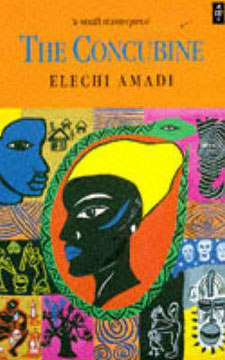
The Concubine, by Elechi Amadi
Ihuoma, a beautiful young widow of exemplary character, has the admiration of the entire community in which she lives, and especially of the hunter Ekwueme. Obedient to the expectations of the traditional society they belong to, they forswear their love so that Ekwueme can marry the girl to whom he has been betrothed since birth. But their passion is fated, and jealousy, a love portion and the closeness of the spirit world, lift this simple tale on a tragic plane.

The Spider King’s Daughter, by Chibundu Onuzo
Seventeen-year-old Abike Johnson is the favourite child of her wealthy father. She lives in a sprawling mansion in Lagos, protected by armed guards and ferried everywhere in a huge black jeep. A world away from Abike’s mansion, in the city’s slums, lives an eighteen-year-old hawker struggling to make sense of the world. His family lost everything after his father’s death and now he sells ice cream at the side of the road to support his mother and sister. When Abike buys ice cream from the hawker one afternoon, they strike up a tentative and unlikely romance. But as they grow closer, revelations from the past threaten their relationship and both Abike and the hawker must decide where their loyalties lie.

Transwonderland: Travels in Nigeria, by Noo Saro Wiwa
At its heart Noo Saro-Wiwa's Looking for Transwonderland: Travels in Nigeria is both a travel memoir and a search for closure. Noo Saro-Wiwa, the daughter of the world-renowned anti-corruption and environmental activist Ken Saro-Wiwa was brought up in England but regularly visited Nigeria every year, that was until her father was executed in 1995 by the military government of Sani Abacha. After her father's murder Noo Saro-Wiwa decided that she would rather not have anything more to do with Nigeria and stayed away from the country for 10 years. Looking for Transwonderland is Noo Saro-Wiwa's attempt to rediscover and come to terms with Nigeria, to connect with her family history and heritage through experiencing Nigeria's rich diversity and to understand its complexities.

Tropical Fish, by Doreen Baingana
Tropical Fish follows the three Mugisha sisters, as they grow up against the backdrop of Uganda in the 1980s. Patti is a born-again Christian; Rosa is adventurous and sexually precocious. The star of the show however is Christine. We travel with her as she takes her first wobbly steps in high heels and later encounters the alienation amidst material wealth of America, before her final return home.

The Blind Kingdom, by Véronique Tadjo
This multi-layered narrative comprises a series of interwoven short stories and poetic texts which can be read within continental Africa, the African Diaspora and beyond. Véronique Tadjo imagines an African society on the brink of total collapse, yet there is no doubt that the story resonates in unsettling ways with recent political and social unrest in Côte d´Ivoire. This is a lyrical and yet haunting story, a book of love with fresh insights into the unfinished and complex struggles for African independence. Tadjo envisions a new world where outrage and chaos — necessary for change — generate hope, creativity and renewal.

Joys of Motherhood, by Buchi Emecheta
Nnu Ego is a woman devoted to her children, giving them all her energy, all her worldly possessions, indeed, all her life to them -- with the result that she finds herself friendless and alone in middle age. This story of a young mother's struggles in 1950s Lagos is a powerful commentary on polygamy, patriarchy, and women's changing roles in urban Nigeria.

The Secret Lives of Baba Segi’s Wives, by Lola Shoneyin
The Secret Lives of Baba Segi’s Wives is a book that explores the dynamics of a polygamous home in urban (circa 2001) Ibadan in Nigeria. It is told with a dry wit, very satirical and earthy. A stirring tale of men and women, mothers and children, servitude and independence, Shoneyin's novel illuminates the common threads that connect the experiences of all women: the hardships they bear, their struggle to define themselves, and their fierce desire to protect those they love.

***These books may be the focus of the festival but there are many other titles available for sale at the book fair. You don't want to miss out on these treasures. Happy New Month readers!

Tuesday, 10 July 2012

Soyinka @ 78: International Cultural Exchange Prog.


Zmirage Multimedia Limited (Nigeria and UK) and GlobalNewHaven (Nigeria and USA), organizers of the WS78 International Cultural Exchange programme “The Mind of a Patriot”, invite you to a lecture titled "From Tigritude to Transcendence: The Conscience and Conscientiousness of Wole Soyinka" by Robert Fox, Professor of English and Africana Studies at Southern Illinois University, United States of America.

Venue: Soyinka Hall, Freedom Park, (former colonial prison) Lagos
Date: July 12th 2012
Time: 11:00 am

The lecture, in honour of our patron, Nobel Prize Laureate Wole Soyinka on his 78th birthday, is billed to attract scholars, students, writers, artisans, culture enthusiasts and other professionals from business and public service. It will be moderated by the cerebral Professor Segun Ojewuyi of Southern Illinois University Carbondale.

RSVP the event by sending a mail to firo_po@yahoo.co.uk

Wole Soyinka headlined the Garden City Literary Festival in 2010. This is also to wish him a happy birthday from the GCLF Team as he clocks 78 on Friday.

Friday, 6 July 2012

A Harvest with Wole Soyinka

Every Sunday in July, there will be performances of plays written by Wole Soyinka at Terrakulture. Click on poster for more details. 

Thursday, 28 June 2012

Iheoma Nwachukwu: On PH World Book Capital Bid

The Adventure of Port Harcourt’s Bid to Become World Book Capital City

By Iheoma Nwachukwu


Peter Pan and Port Harcourt have one thing in common—Lewis Harcourt, for whom the city is named. In 1912, the year the city was christened, Lewis Harcourt, serving in H.H. Asquith’s cabinet, authorized the placement of the Peter Pan statue in London’s Kensington Gardens. He might as well have authorized the placement of the statue in Port Harcourt (or the placement of the Muse in Port Harcourt), because the qualities of adventure, diversity, and eternal youth that Peter Pan personalizes, that the Peter Pan story embodies, are attributes that have drawn migrants, and writers, to Port Harcourt for all of its hundred years.

Peter Pan
Port Harcourt’s bid to become the 2014 World Book Capital City then comes as little surprise for a city that shares a historical bond with probably the most popular, most exciting, most adapted character in children’s literature.

The World Book Capital City title, which began in 2001, is presented by UNESCO to a city with the best programme that promotes books and reading, and shows the most convincing dedication of all players in its local book industry.

The title runs from April 23 (UNESCO’s World Book and Copyright Day) to April 22 of the following year. Madrid won the incipient award; Yerevan in Armenia currently holds the 2012 award. Oxford (United Kingdom) and Pula (Croatia) are just two of the other cities Port Harcourt has to defeat for the 2014 title.

Port Harcourt, capital of Rivers state and Nigeria’s oil capital, seems the obvious choice for the 2014 title given the quality, variety, broad international scope, and commitment of all actors in the local book industry, evident in its World Book Capital City programme. First, the theme for the bid—Books: Window to Our World of Possibilities—evokes a potent image of the book, knowledge, as the lens through which we interpret and influence our world.

The Port Harcourt World Book Capital City programme proposes to begin with the performance of an inspiring theme song, performed by a popular Nigerian artiste, and written by a lucky youth whose work is chosen from a nationwide pool. Another slated activity is a national symposium which will assemble stakeholders in the book chain industry to discuss the future literacy and literary culture in Nigeria, and the importance of literature in unlocking the potentials of the country’s youth. The Rivers State Governor, Rotimi Amaechi, an avid reader who holds Bachelors and Masters degrees in English Literature, will lead this discussion.

Nigeria’s President, Dr. Goodluck Jonathan, will also be invited to read an excerpt from a classic Nigerian novel to children. The President recently led a national reading campaign named ‘Bring Back the Book,’ and his involvement will surely encourage more young people to read and write. Also expected to read to children at chosen locations across the city of Port Harcourt are authors, poets, and celebrities from film, music, sports, as well as the business communities.

Perhaps the greatest boon to Port-Harcourt’s bid is the Garden City Literary Festival, held yearly in Port Harcourt since 2008 by the Rainbow Book Club. The festival, which has seen attendance by writers like Wole Soyinka, Chinua Achebe, Ngugi Wa Thiong’O, and Ama Ata Aidoo, holds author readings, fiction and poetry workshops for emerging writers, writing, drama and arts workshops for children, book fairs, and many other activities over a five-day period. Thus, the World Book Capital City programme will gain from the experience of the administrators of the literary festival, since the Rainbow Book Club, which runs the festival, manages Port Harcourt’s bid, too.

Nigeria’s literary heritage is not in doubt; it has gifted the world legendary writers like Wole Soyinka, the first person of African descent to win the Nobel Prize for Literature; Chinua Achebe, author of Things Fall Apart, the most widely read book by an African; and other world-renowned writers such as Ken Saro-Wiwa, J. P. Clarke, Ben Okri, and Elechi Amadi.

Port Harcourt’s win will not only cast a fresh eye on Nigeria’s past achievements, but will also catalyze the intense literary scene (many successful young Nigerian writers like Chimamanda Ngozi Adichie, who runs a yearly workshop, and Port Harcourt-born Igoni Barrett, already inspire lots of Nigerians) and give Nigerian literature a helpful jab in the arm. In its own right, Port Harcourt has a rich literary pedigree, and has provided roof and Muse to writers for decades. For example, it is home to numerous authors, including the iconic novelist Elechi Amadi, the brilliant poet Gabriel Okara, as well as celebrated historians like Robin Horton and E. J. Alagoa. Also, Old Port Harcourt Town was a vibrant cultural centre in the 1970s, and provided entertainment and education through plays directed by the likes of Comish Ekiye with a distinguished cast that included actors Doye Agama, Barbara Soki, and Aso Douglas. Some of the famous early educational institutes in Nigeria such as the Okrika Grammar School, and the Archdeacon Crowther Memorial Girls Secondary School, also actively promoted literature in Port Harcourt.

The promotion of literature among the youth is one obvious impact of any literary programme, especially one overseen by UNESCO. The Garden City literary Festival is proof of this kind of impact. Dana Donubari, who attended one of the festival workshops in 2009, was inspired to publish a collection of poems titled Tears for Ogoni. Port Harcourt, which until recently experienced violent activity from militant youth demanding a fair share of Nigeria’s oil wealth, has the potential to change the lives of even more youth as a World Book Capital City—perhaps reach an ex-militant and inspire this youth to tell his story.

There is so much potential here, and UNESCO must know this, too. Port Harcourt looks ready to become World Book Capital City. This would be something of an adventure, a win that has potential to draw the adventure-boy himself, Peter Pan, to the fascinating coastal city of Port Harcourt. As well as draw the gaze of the entire globe.

The world can hardly wait.

Iheoma Nwachukwu is a creative writer. He has received fellowships from the Chinua Achebe Center for African Writers and Artists, Bard College, New York, and the Michener Center for Writers, University of Texas, Austin.

Sylva Ifedigbo: On the PH World Book Capital Bid

Books Are a Window to Our World of Possibilities: A Look at the Port Harcourt Bid for UNESCO World Book Capital City

By Sylva Nze Ifedigbo


Home to renowned writers such as Elechi Amadi, Gabriel Okara and Kaine Agary, Port Harcourt, Nigeria’s oil-rich city and capital of Rivers State, has announced its bid to be named the UNESCO World Book Capital City in 2014, a bid which will see it emerge as the first city in Sub-Saharan Africa to hold the enviable title.

Every year UNESCO convenes delegates from the International Publishers Association, the International Booksellers Federation, and the International Federation of Library Associations and Institutions to grant the title of UNESCO World Book Capital to one city. This city holds the title for one designated year, from 23 April (UNESCO World Book Day) until 22 April of the following year and undertakes to organize a series of enriching, educative and entertaining events around books, literature and reading. The title of World Book Capital is given to the city with the best programme dedicated to books and reading.

The Port Harcourt bid for this title—which is spearheaded by the Rainbow Book Club, organizers of the annual Garden City Literary Festival, in conjunction with the Rivers State Government—sees Port Harcourt pitched against cities like Oxford in the United Kingdom, Vilnius in Lithuania, Pula in Croatia and Yaoundé in Cameroon, the only other city from Africa. The title, which was launched in 2001 and is currently held by Ljubljana in Slovenia, has been held at various times in the past by Madrid, Alexandria, New Delhi, Montreal, Antwerp, Turin, Bogotá, Amsterdam, and Beirut, with Bangkok already announced as the chosen city for 2013.

The bid by Port Harcourt comes at a time when Nigeria is experiencing a literary revival with the rise of writers such as Sefi Atta (Winner of the Noma Award, 2009), Kaine Agary (NLNG Nigeria Prize for Literature, 2008) Chimamanda Ngozi Adichie (winner of the Orange Prize, 2007), Commonwealth Book Prize winners like Helon Habila, Uwem Akpan and Adaobi Tricia Nwaubani, Caine Prize Winner E.C Osondu, and a host of others who are blazing the trail globally.

Closely related to this is the increased focus on literary activities in the country. This commendable trend is highlighted by programmes such as the President Jonathan-initiated “Bring Back the Book” project, the Farafina annual creative writing workshop, and the Garden City Literary Festival. Also worthy of note is the institution of competitive literary prizes and awards such as the Caine Prize, the Wole Soyinka Prize, and the NLNG Nigeria Prize for Literature which at $100,000 stands as the most lucrative literary award in Africa.

The city of Port Harcourt, significant for its mix of cultures and its status as the hub of the oil-rich Niger Delta region, has come of age as a haven of culture and is fast making a name for itself as a major player on the global literary stage. Port Harcourt is also home to the annual Garden City Literary Festival. This festival is organized by Rainbow Book Club and has been described by Thisday Newspapers as “arguably the biggest event of its kind in sub-Saharan Africa.” The festival in its five years of existence has attracted such literary heavyweights as Kenya’s Ngugi wa Thiong’o, Ghana’s Ama Ata Aidoo and Nigeria’s Wole Soyinka, Chinua Achebe, J. P. Clark and Sefi Atta. Other guests of honour at the GCLF include dignitaries such as former Commonwealth Secretary-General Chief Emeka Anyaoku, as well as revered civil liberties activist Reverend Jesse Jackson.

It is to such earnest efforts in promoting literature that the award of the UNESCO World Book Capital title is sure to make the most impact. The status will contribute in no small way to maintaining the focus on literary activities in Nigeria. Furthermore, should its bid be successful, Port Harcourt will no doubt have a golden opportunity to build on the legacy of its literary history and culture to expand its role and influence on the continent.

One big plus for Port Harcourt’s bid is the endorsement and spirited support it enjoys from the government of Rivers State led by Rt. Honourable Rotimi Amaechi. The governor, a literary enthusiast, has committed to supporting a dynamic team composed of literary figures and leaders from the private sector, coordinated by the Rainbow Book Club, to drive the activities for the 2014 bid. This team includes such names as Noble Pepple, Ndidi Nwuneli, Anthony Epelle and A. Igoni Barrett, and it is chaired by Koko Kalango, founder of the Rainbow Book Club and Director of the Garden City Literary Festival.

As part of the bid process this committee has chosen the theme of “Books: Window to our World of Possibilities” to drive the 2014 activities in Port Harcourt. A rich itinerary of events is also planned to run through the World Book Capital year in Port Harcourt, including the opening of the multi-purpose Garden City Library Complex, drama performances, celebrity book reading sessions, a national symposium, and a host of other projects.

It is interesting to note that the 2014 bid by Port Harcourt coincides with the centenary celebration of Nigeria as we mark 100 years since the amalgamation of the Northern and Southern Protectorates by the British colonial government. It will be a befitting gift for the entire country if Port Harcourt were to become the World Book Capital at this time. Besides being a valid acknowledgement of the country’s rich literary heritage, it will also be a worthy template for emulation by other African countries in the promotion of reading, literature and the arts in general.

It is exciting that Port Harcourt is in contention for the World Book Capital and one must applaud the vision and forthrightness of the Rainbow Book Club and the Rivers State Government. As a major city in the literature-rich country of Nigeria, Port Harcourt will present unique opportunities for enhancing the idea of the “book” in the 21st century and its role as a window to a world of opportunities. This is one commendable effort that surely needs all the support it can get.

Sylva Nze Ifedigbo is a creative writer and communications practitioner who lives in Lagos, Nigeria.

Thursday, 24 May 2012

Kwirkly Goes Arty

Kwirkly, a space to curate and share ideas is doing something interesting.  Some ideas hit us quickly: one is about a partnership between Wole Soyinka and MI. "Rapper MI releases a mixtape whose lyrics are made from poems of Nobel Prize winner (Literature) Wole Soyinka."

There is another interesting one about crowd-sourcing a fictional piece. "Start a crowd-source fictional story on Twitter, edited & moderated by someone like Ikhide Ikheloa or Molara Wood, where each Twitter user, after writing his/her part in 140 characters or less, mentions another person that continues the story. Each tweet is followed by a hashtag that allows the moderator to curate the whole story, which can later be downloaded free."

Kwirkly should write an idea about making literary festivals better, more accessible in Nigeria. That would be an interesting one to read.