Showing posts with label Doreen Baingana. Show all posts

Friday, 26 October 2012

Doreen Baingana in Conversation with Igoni Barrett

Igoni Barrett, author of From Caves of Rotten Teeth,  introduced Doreen Baingana, two-time shortlisted author for the Caine Prize for African writing. After this, Doreen read from her collection of interlinked short stories Tropical Fish: Stories out of Entebbe. We meet a girl who through her words, transformed into a woman; she was exploring her parents' room, and at the same time, the world.

Barrett dived into the conversation, asking interesting questions, raising interesting issues, rousing some dust. How should writing--if it does--address women's issues? How does her work Tropical Fish achieve this? For Baingana, "writing should first of all, it's about entertainment, enjoying words, and language. Also, the story is about the exploration of being human, of a young girl transforming into a woman. For her, it's all a game of adolescence. It helps us understand what makes us men, what makes us women and it helps us address these issues."

The African publishing sector is undergoing changes. However, Barrett wanted to know if female writers face any particular challenges that their male counterparts do not experience when it comes to publishing? Baingana thinks the challenges that face African publishing are not gender selective however "there are challenges that we face as female writers. The challenge for me now is that I have a four-year-old child. Writing is something that takes a lot of time, mental space but raising a family also takes a lot of time."  She equally considers being a writer, being a female writer in Africa a privilege "Just to become a writer is a privilege; it has to do with the kind of education that you got, that you had access to proper health care. You don't become a writer out of the blues but it is because of how you were brought up, a sum of your experiences. There are challenges that women face when it comes to education." (Find out stats about female education in Africa). Doreen Baingana studied Law at the Makerere University, Kampala and has an MFA from the University of Maryland, after which she returned to Uganda, where she still lives. 

Baingana also talked about women writers and self-censorship. The society does not think that women writers should be sexually explicit, not in reality, definitely not in writing. She says "You may not realise how much you are self-censored. There are some of my stories that are sexually explicit however there are women who do not write such because they self-censor." 


Barrett also wanted to know if there are any such things as women issues. If there are, how does Baingana's writing address them as a female writer? In response, Baingana delves into the world of publishing and its tags for female writing "I think that publishers take female writers as writing about women issues but they take male writers as writing about human issues. So many men get published because of that and there are many women who could have gotten big but are not."

Baingana accepted that she addresses issues pertaining to women in her writing. She made a case for her choice "I think it is about being marginalised, silenced, then you have to make a bigger push to be seen. We have to portray reality. Women are a complexity of characterisations and fiction should show that. Right now, I prefer seeing through female characters. We should be free to write whatever we want."

Baingana is known for her fiction for which she has won awards. However, Barrett made the audience know that she once tried her hands on poetry. She had this to say about her poetry which she called "unpublishable" "I used to write poetry, I still do; for me, poetry is just an emotional outlet. I am still very interested in poetry, and in language though I am better with fiction. So, I sneak poetry into my fiction sometimes." 

What role does art play in the society, if it plays any? Baingana made a case for arts. "My initial belief is that art can be valued even as a beautiful thing. However art can help in social development. As writers, we learn to express ourselves about how to be in this world. Art helps us reflect on the realities in the society; look at what art did with apartheid in South Africa. Art can also help with female emancipation. There is also the catharsis too that you feel when art makes you feel better."

Baingana was asked to describe Nigeria, to a Ugandan friend; she had this to say "I fear generalisations. If you write about it, then you can be specific. The diversities her are remarkable. When you go to a different place, you see things starkly: how do you eat hot suya in really hot weather? There is a lot of energy here, a country full of energetic people. I think Nigeria should work more on its public relations because we hear more of the negativity."

The floor was opened to the audience who asked a variety of questions: what should be the impact of writing? What advice do you have for budding writers on publishing? How should women writers deal with motherhood, housework and writing?  To the last question, she responded in a funny way "then they have to stop doing housework." Then more seriously, she continued "Most women do not have a sense of self. It is very important for women to create time for themselves. There is the whole issue of work-life balance and it's in finding what's comfortable. It's about the choices that you make in your life.  It's unfortunate that people think that you are a "good woman" yet you do not have time to write. What does it mean to be a writer to you? What does it mean being a woman? If you need to write and deal with the household, then hire a maid." She concluded, the audience laughed as they clapped and proceeded to the back of the hall for Baingana's autograph. 

Friday, 12 October 2012

Favourite Five: Doreen Baingana


As the GCLF draws closer--yes, the countdown has long started; we are just a weekend away--we will start our series of conversations with invited writers and guest authors and, eventually, other participants at the festival. We begin with Doreen Baingana, author of the 2006 Commonwealth Writers' Prize-winning collection of stories, Tropical Fish: Stories Out of Entebbe. She will facilitate the fiction workshop at GCLF 2012. We asked her about her favourite five books, and she had this to say: "I’ve read so many wonderful books that it's a shame to pick just five, and we all know lists can be arbitrary. However, the five books below changed my life as a writer and a woman."


Beloved by Toni Morrison: This book is so beautiful, sentence by sentence, with language as evocative as a poem or song. Morrison’s gorgeous and original style makes the horrendous topics she tackles, including slavery and murder, palatable. In it, a mother murders her child rather than let her become a slave, and the child comes back to haunt her. Beloved speaks for a people. Morrison portrays so well the terrible legacy of slavery so that we come to a more empathetic understanding of the history of African Americans. We are right there with her heroines and heroes as she brings to life this history through their struggles. Not only that, it is a great ghost story and a moving but unsentimental love story. No wonder Beloved was voted by American critics as the greatest American novel of the second half of the last century.


Burgher’s Daughter by Nadine Gordimer: She, like Morrison, uses individual lives to explore weighty political themes. I came to a deeper understanding of how the apartheid system affected all levels of South African society—victims and perpetrators both—on a personal level through Gordimer’s books. Burgher’s Daughter is about a child of famous human rights activists who feels trapped by her parents’ heroism, and it explores her attempt to forge an identity separate from their legacy. Gordimer’s command of scene, language, tone, and character are masterful.


One Hundred Years of Solitude by Gabriel Garcia Marquez: This huge and brilliant novel traces a family’s fate during an era of political oppression and rebellion in a Latin American country. The author, well known for his use of magic realism, makes supernatural events completely believable. The book’s scope is so large and the language so delicious you can lose yourself in another world for days on end. This book taught me that fiction is the freest world there is.


Letters to a Young Poet by Rainer Maria Rilke: Every writer and poet should read this book which discusses fundamental issues about this life choice. It is not fiction, but a series of letters that the great 18th century German poet wrote to a young man who wanted to be a poet. It has taught me deep and serious lessons about living one’s life with integrity and dealing with questions of spirituality, solitude, and love. He urges us to avoid convention and ‘trust in the difficult.’


Revolution from Within by Gloria Steinem: This book is my feminist Bible, written by one of the icons of the women’s movement in the US in the 70’s and 80’s. This well-researched book goes further than noting the gender inequalities in our societies; it argues that women and men need to excavate their own psyches to unlearn inherited ways of thinking and behaving. It is an intelligent and eloquent call to action, starting with the inner life, as Rilke’s letters do. And it has stood the test of time.

Friday, 28 September 2012

Tuk-Tuk Trail to Suya and Stars by Doreen Baingana


Doreen Baingana writes in AGNI Online, about a dance many Nigerians are familiar with--a keke napep ride, and a snack many Nigerians love--suya. Have a restful weekend!

You venture into the dark, and it looms over and crowds your every space, thick, even pushes into your earlobes like cotton wool, this hazy yellow darkness choked with harmattan dust. You are boxed in by solid air and you must breathe it in. You enter a tuk-tuk, the most rickety vehicle ever made, as if banged together from the spare parts of small cars circa 1960, Austins, say, and old saucepans panel-beaten into shape, all loosely held by rusted nails and chains and placed on top of what was once a three-wheeled motorbike, now an ungainly carriage with a snub metal nose. You sit on plastic, which is easy to wipe of dust, but clings like a kid to your sweaty thighs. All the tuk-tuks are painted orange to compete with the river of dirty sand called the road—haze, heat, rush, animal-like hoots and horns. Orange to shock your eyes into seeing.

Still, it provides the miracle every vehicle does: to move, all you have to do is sit, or rather grip desperately, as there are no side walls or doors. The breeze is a blessing; it strokes your cheek and whispers in your ear that you can breathe, it’s okay, but not too deeply. No, your lungs cannot suck air out of dust as fish do out of water. This dust that covers everything in a fine gray layer, gauze-like, sticky.

You realize as you climb into the tuk-tuk that with cars you settle quickly, assured that the solid metal case will protect you from the rush of the busy street, the intense heat and light, the potholes underneath, the direct hit of any accident. For a while, driven from A to B, you have the pleasure of giving up responsibility and you sink gratefully into the cushioned bowl of the back seat. Not in a tuk-tuk. You sit, yes, but unsupported, holding tight to the rusty rail, sweaty fingers slipping as you are shaken from side to side like jelly, shaken inside out. You are in a blender, a coffee grinder, an angry machine that jostles and jangles you. It sets your stomach churning and everything in it is squeezed and kneaded and turns to shit, straining to escape with every hard bump, your ass clenched tight. Oops, you piss in your pants as the tuk-tuk driver swerves to avoid potholes the size and shape of dried ponds. His dark ball of a head bobs in front of you as he does the same desperate bouncing you do: the tuk-tuk dance.

It’s not all dance. It’s real danger, as each swerve to avoid falling into a pothole leads to a motorbike coming straight at you. Read more on AGNI.

Doreen Baingana is the Ugandan author of Tropical Fish: Stories out of Entebbe, which won an AWP Short Fiction Award and a Commonwealth Prize. She has also won the Washington Independent Writers Fiction Prize and was twice a finalist for the Caine Prize for African Writing. Her stories and essays have appeared in Glimmer Train, African American Review, Callaloo, The Guardian (UK), Chimurenga, and Kwani.  She is a guest writer at the GCLF 2012. 

Tuesday, 31 July 2012

GCLF 2012: Books of the Festival

Death and the King’s Horseman, by Wole Soyinka
Elesin Oba, the King's Horseman, has a single destiny. When the King dies, he must commit ritual suicide and lead his King's favorite horse and dog through the passage to the world of the ancestors. A British colonial officer, Pilkings, intervenes.

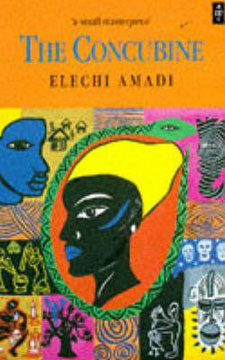
The Concubine, by Elechi Amadi
Ihuoma, a beautiful young widow of exemplary character, has the admiration of the entire community in which she lives, and especially of the hunter Ekwueme. Obedient to the expectations of the traditional society they belong to, they forswear their love so that Ekwueme can marry the girl to whom he has been betrothed since birth. But their passion is fated, and jealousy, a love portion and the closeness of the spirit world, lift this simple tale on a tragic plane.

The Spider King’s Daughter, by Chibundu Onuzo
Seventeen-year-old Abike Johnson is the favourite child of her wealthy father. She lives in a sprawling mansion in Lagos, protected by armed guards and ferried everywhere in a huge black jeep. A world away from Abike’s mansion, in the city’s slums, lives an eighteen-year-old hawker struggling to make sense of the world. His family lost everything after his father’s death and now he sells ice cream at the side of the road to support his mother and sister. When Abike buys ice cream from the hawker one afternoon, they strike up a tentative and unlikely romance. But as they grow closer, revelations from the past threaten their relationship and both Abike and the hawker must decide where their loyalties lie.

Transwonderland: Travels in Nigeria, by Noo Saro Wiwa
At its heart Noo Saro-Wiwa's Looking for Transwonderland: Travels in Nigeria is both a travel memoir and a search for closure. Noo Saro-Wiwa, the daughter of the world-renowned anti-corruption and environmental activist Ken Saro-Wiwa was brought up in England but regularly visited Nigeria every year, that was until her father was executed in 1995 by the military government of Sani Abacha. After her father's murder Noo Saro-Wiwa decided that she would rather not have anything more to do with Nigeria and stayed away from the country for 10 years. Looking for Transwonderland is Noo Saro-Wiwa's attempt to rediscover and come to terms with Nigeria, to connect with her family history and heritage through experiencing Nigeria's rich diversity and to understand its complexities.

Tropical Fish, by Doreen Baingana
Tropical Fish follows the three Mugisha sisters, as they grow up against the backdrop of Uganda in the 1980s. Patti is a born-again Christian; Rosa is adventurous and sexually precocious. The star of the show however is Christine. We travel with her as she takes her first wobbly steps in high heels and later encounters the alienation amidst material wealth of America, before her final return home.

The Blind Kingdom, by Véronique Tadjo
This multi-layered narrative comprises a series of interwoven short stories and poetic texts which can be read within continental Africa, the African Diaspora and beyond. Véronique Tadjo imagines an African society on the brink of total collapse, yet there is no doubt that the story resonates in unsettling ways with recent political and social unrest in Côte d´Ivoire. This is a lyrical and yet haunting story, a book of love with fresh insights into the unfinished and complex struggles for African independence. Tadjo envisions a new world where outrage and chaos — necessary for change — generate hope, creativity and renewal.

Joys of Motherhood, by Buchi Emecheta
Nnu Ego is a woman devoted to her children, giving them all her energy, all her worldly possessions, indeed, all her life to them -- with the result that she finds herself friendless and alone in middle age. This story of a young mother's struggles in 1950s Lagos is a powerful commentary on polygamy, patriarchy, and women's changing roles in urban Nigeria.

The Secret Lives of Baba Segi’s Wives, by Lola Shoneyin
The Secret Lives of Baba Segi’s Wives is a book that explores the dynamics of a polygamous home in urban (circa 2001) Ibadan in Nigeria. It is told with a dry wit, very satirical and earthy. A stirring tale of men and women, mothers and children, servitude and independence, Shoneyin's novel illuminates the common threads that connect the experiences of all women: the hardships they bear, their struggle to define themselves, and their fierce desire to protect those they love.

***These books may be the focus of the festival but there are many other titles available for sale at the book fair. You don't want to miss out on these treasures. Happy New Month readers!

Saturday, 28 July 2012

Call For Entries: The GCLF Writers' Workshop


Entries for the 5th edition of the annual Garden City Literary Festival Writers’ Workshop are now being accepted. The workshop will hold in October 2012.

The Writers’ Workshop is a creative platform where aspiring writers sit under the tutelage of their established counterparts. It is recommended for anyone who wants to improve their writing skills. Each applicant must indicate their preferred choice of workshop.

Application to more than one class will not be considered. Participants are required to submit samples of their writing (in line with requirement for the different genres) before Friday 31st August, 2012, to secure a place.

All applicants must submit the following:

FOR SHORT STORIES:
  • Sample short story of between 1000 and 1500 words (please highlight--in the subject of your email--how many words your story contains). You should submit only your best story.
FOR POEMS:
  • Sample poem (no longer than 1000 words). Please note: synopses or abstracts will NOT be accepted.
FOR DRAMA
  • A ‘one act’ play script on any subject.
PLEASE NOTE THAT THE FOLLOWING GUIDELINES MUST BE ADHERED TO:
  • A one-page personal CV must be submitted along with each entry;
  • A brief paragraph about what you intend to learn from your chosen workshop must be included in submission;
  • All manuscripts must be double spaced with a header showing ‘author’ to the left, ‘title’ in the middle and ‘page number’ to the right;
  • Handwritten entries or entries that do not adhere to the manuscript format above will not be accepted.
All sample materials must be submitted to info@gardencityfestival.com not later than 12 noon on Friday 31st August, 2012. Materials submitted after this date and time will not be accepted.

*Guest writers at the 5th edition of the Garden City Literary Festival include Doreen Baingana, Lola Shoneyin, Veronique Tadjo, Noo Saro-Wiwa, Chibundu Onuzo and the Caine Prize administrator, Lizzy Attree.

Friday, 22 June 2012

Friday, 18 May 2012

Jahazi Literary & Jazz Festival 2012

The newly created Jahazi Literary & Jazz Festival in Zanzibar has just announced its lineup of artists for this year's festival on Facebook. Among the guest authors are Ugandan Doreen Baingana and Nigerian Chimamanda Ngozi Adichie. Doreen Baingana visited Port Harcourt in February of this year for a reading organised by the Rainbow Book Club. Rainbow Book Club, which is the organiser of the Garden City Literary Festival, has hosted many award-winning authors, including Caine Prize winner E. C. Osondu, Uwem Akpan, Adaobi Tricia Nwaubani and Kaine Agary, amongst others.