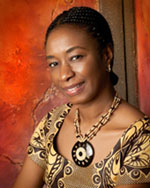
Showing posts with label Sefi Atta. Show all posts

Saturday, 9 March 2013

Sefi Atta's Play at Terra


Lufodo Productions held London to a stand still at the 30 Nigeria House, Theatre Royal Stratford East London, with three plays which included Sefi Atta’s The Naming Ceremony. The play featured the likes of Olu Jacobs, Joke Silva and Bimbo Akintola.

For those who missed the excitement at the Nigeria House London Olympics 2012, the play will be brought to you in March 2013. Though coming with a different cast, the play promises to be worth the wait.

Synopsis:
On the day of her first child’s naming ceremony, Tola is faced with the challenges of juggling her family relationships with caring for her daughter. The story of wit and wills shows how she handles the mounting pressure as a mother, wife, daughter, daughter-in-law and friend.

Details:
A LAPA Production (Run by Joke Silva and Olu Jacobs )
- Every Sunday in March
- At Terra Kulture
- 3pm and 6pm
- Tickets N2,500

Please call 07069771347 for more details.
- Discount: 15% off on first 50 tickets

Wednesday, 25 July 2012

Everything Sefi Atta


Nigerian author Sefi Atta currently enjoys a great reception of her fictional work. Named the winner of the Wole Soyinka Prize for Literature in Africa in 2006 and the Noma Award for Publishing in Africa in 2009 among others, Atta has published three novels and a collection of short stories with more pieces appearing soon. She has also written several plays that have been performed both on stage and on the radio. I am seeking contributors to The Sefi Atta Reader. The Reader will contain critical essays of approximately 9000 to 11000 words, key topic essays of approximately 3000 to 4000 words and interviews with Sefi Atta. A publisher has been identified, and Atta will make herself available for the interviews. Contributions should focus primarily on her body of writing, but may briefly address any of her interlocutors or situate her work within the larger body of African literature, especially the latest wave of contemporary African writing.

Topics/approaches might include, but are not limited to, the following:
  • Globalization
  • Post-colonial theory
  • Women and motherhood
  • Female friendship
  • Conflict between women and any of the following: men, culture/tradition, their communities/families
  • Convergence of personal and political spheres
  • Class barriers
  • Depiction and role of Lagos as a city in the literature
  • Impact of death
  • Neo-colonialism
Please contact Dr. Walter Collins at collinsw@sc.edu for more information and any questions. Contribution proposals (no longer than 250 words) should be sent to the address above by July 31, 2012. First drafts of contributions are due on or before September 30, 2012 and may be sent electronically. Please see www.sefiatta.com for more details regarding Atta’s career and work.

The Naming Ceremony, Stage Play Written by Sefi Atta

The play shows a couple, Akin and Tola, who have had their first child. As they both prepare for their baby’s naming ceremony, Tola prepares for a day of disagreements, especially with her husband, her mother and mother in-law.

Tickets: All seats: £6
Times: 8.30pm
Location: Auditorium
Additional Information
Running time: 30 Minutes
Nigeria House is adjacent to the Olympic Park. Please ensure that you travel to the venue by public transport. More information at www.getaheadofthegames.com

More information here

Thursday, 28 June 2012

Sylva Ifedigbo: On the PH World Book Capital Bid

Books Are a Window to Our World of Possibilities: A Look at the Port Harcourt Bid for UNESCO World Book Capital City

By Sylva Nze Ifedigbo


Home to renowned writers such as Elechi Amadi, Gabriel Okara and Kaine Agary, Port Harcourt, Nigeria’s oil-rich city and capital of Rivers State, has announced its bid to be named the UNESCO World Book Capital City in 2014, a bid which will see it emerge as the first city in Sub-Saharan Africa to hold the enviable title.

Every year UNESCO convenes delegates from the International Publishers Association, the International Booksellers Federation, and the International Federation of Library Associations and Institutions to grant the title of UNESCO World Book Capital to one city. This city holds the title for one designated year, from 23 April (UNESCO World Book Day) until 22 April of the following year and undertakes to organize a series of enriching, educative and entertaining events around books, literature and reading. The title of World Book Capital is given to the city with the best programme dedicated to books and reading.

The Port Harcourt bid for this title—which is spearheaded by the Rainbow Book Club, organizers of the annual Garden City Literary Festival, in conjunction with the Rivers State Government—sees Port Harcourt pitched against cities like Oxford in the United Kingdom, Vilnius in Lithuania, Pula in Croatia and Yaoundé in Cameroon, the only other city from Africa. The title, which was launched in 2001 and is currently held by Ljubljana in Slovenia, has been held at various times in the past by Madrid, Alexandria, New Delhi, Montreal, Antwerp, Turin, Bogotá, Amsterdam, and Beirut, with Bangkok already announced as the chosen city for 2013.

The bid by Port Harcourt comes at a time when Nigeria is experiencing a literary revival with the rise of writers such as Sefi Atta (Winner of the Noma Award, 2009), Kaine Agary (NLNG Nigeria Prize for Literature, 2008) Chimamanda Ngozi Adichie (winner of the Orange Prize, 2007), Commonwealth Book Prize winners like Helon Habila, Uwem Akpan and Adaobi Tricia Nwaubani, Caine Prize Winner E.C Osondu, and a host of others who are blazing the trail globally.

Closely related to this is the increased focus on literary activities in the country. This commendable trend is highlighted by programmes such as the President Jonathan-initiated “Bring Back the Book” project, the Farafina annual creative writing workshop, and the Garden City Literary Festival. Also worthy of note is the institution of competitive literary prizes and awards such as the Caine Prize, the Wole Soyinka Prize, and the NLNG Nigeria Prize for Literature which at $100,000 stands as the most lucrative literary award in Africa.

The city of Port Harcourt, significant for its mix of cultures and its status as the hub of the oil-rich Niger Delta region, has come of age as a haven of culture and is fast making a name for itself as a major player on the global literary stage. Port Harcourt is also home to the annual Garden City Literary Festival. This festival is organized by Rainbow Book Club and has been described by Thisday Newspapers as “arguably the biggest event of its kind in sub-Saharan Africa.” The festival in its five years of existence has attracted such literary heavyweights as Kenya’s Ngugi wa Thiong’o, Ghana’s Ama Ata Aidoo and Nigeria’s Wole Soyinka, Chinua Achebe, J. P. Clark and Sefi Atta. Other guests of honour at the GCLF include dignitaries such as former Commonwealth Secretary-General Chief Emeka Anyaoku, as well as revered civil liberties activist Reverend Jesse Jackson.

It is to such earnest efforts in promoting literature that the award of the UNESCO World Book Capital title is sure to make the most impact. The status will contribute in no small way to maintaining the focus on literary activities in Nigeria. Furthermore, should its bid be successful, Port Harcourt will no doubt have a golden opportunity to build on the legacy of its literary history and culture to expand its role and influence on the continent.

One big plus for Port Harcourt’s bid is the endorsement and spirited support it enjoys from the government of Rivers State led by Rt. Honourable Rotimi Amaechi. The governor, a literary enthusiast, has committed to supporting a dynamic team composed of literary figures and leaders from the private sector, coordinated by the Rainbow Book Club, to drive the activities for the 2014 bid. This team includes such names as Noble Pepple, Ndidi Nwuneli, Anthony Epelle and A. Igoni Barrett, and it is chaired by Koko Kalango, founder of the Rainbow Book Club and Director of the Garden City Literary Festival.

As part of the bid process this committee has chosen the theme of “Books: Window to our World of Possibilities” to drive the 2014 activities in Port Harcourt. A rich itinerary of events is also planned to run through the World Book Capital year in Port Harcourt, including the opening of the multi-purpose Garden City Library Complex, drama performances, celebrity book reading sessions, a national symposium, and a host of other projects.

It is interesting to note that the 2014 bid by Port Harcourt coincides with the centenary celebration of Nigeria as we mark 100 years since the amalgamation of the Northern and Southern Protectorates by the British colonial government. It will be a befitting gift for the entire country if Port Harcourt were to become the World Book Capital at this time. Besides being a valid acknowledgement of the country’s rich literary heritage, it will also be a worthy template for emulation by other African countries in the promotion of reading, literature and the arts in general.

It is exciting that Port Harcourt is in contention for the World Book Capital and one must applaud the vision and forthrightness of the Rainbow Book Club and the Rivers State Government. As a major city in the literature-rich country of Nigeria, Port Harcourt will present unique opportunities for enhancing the idea of the “book” in the 21st century and its role as a window to a world of opportunities. This is one commendable effort that surely needs all the support it can get.

Sylva Nze Ifedigbo is a creative writer and communications practitioner who lives in Lagos, Nigeria.

Monday, 25 June 2012

A Bit of Difference: Sefi Atta's Latest Novel

Sefi Atta is the author of  the novels Swallow and Everything Good Will Come, and a collection of short stories, News from Home. She has been awarded the Wole Soyinka Prize for Literature and the NOMA Award. Sefi Atta was a guest author at the Garden City Literary Festival in 2010, and she said the following of her her experience there: "This literary Festival was the best I've ever attended."

On A Bit of Difference
In this interview on Publishers Weekly, she speaks about the opening of the novel: "I begin it with a short description of the poster of an African woman advertising a charity, and the rest of the novel is a profile of Deola, a young Nigerian woman who notices the poster at an airport. Her views are similar to mine: If the occasional stereotype is all she has to deal with as an African woman, then she is fortunate. I don’t set out to challenge Western perceptions of Africa, but I might by writing honestly."

Dialogue Series attempts a synopsis of the novel: At thirty-nine, Deola Bello, a Nigerian expatriate in London, is dissatisfied with being single and working overseas. Deola works as a financial reviewer for an international charity, and when her job takes her back to Nigeria in time for her father's five-year memorial service, she finds herself turning her scrutiny inward. In Nigeria, Deola encounters changes in her family and in the urban landscape of her home, and new acquaintances who offer unexpected possibilities. Deola's journey is as much about evading others' expectations to get to the heart of her frustration as it is about exposing the differences between foreign images of Africa and the realities of contemporary Nigerian life. Deola's urgent, incisive voice captivates and guides us through the intricate layers and vivid scenes of a life lived across continents. With Sefi Atta's characteristic boldness and vision, A Bit of Difference limns the complexities of our contemporary world.

Praise for A Bit of Difference
"Atta's splendid writing sizzles with wit and compassion. This is an immensely absorbing book." —Chika Unigwe, author of On Black Sisters Street

"Like Teju Cole’s Open City, Deola’s story is low on drama but rich in life, though Atta’s third-person voice makes less for a portrait of a mind in transit than a life caught in freeze-frame, pinned between two continents and radiating pathos. Wholly believable, especially in its nuanced approach to racial identity, the story feels extremely modern while excelling at the novelist’s traditional task: finding the common reality between strangers and rendering alien circumstances familiar" —Publisher's Weekly