Showing posts with label Noo Saro-Wiwa. Show all posts

Tuesday, 25 December 2012

Noo Saro-Wiwa in Conversation with Miss Ojikutu


Miss Ojikutu in conversation with Noo Saro Wiwa. Interesting questions and responses. More here

What’s the most memorable casual reader feedback you’ve received on your writing?
This email: “All I was left with when the book came to its close was the thought ’I can’t wait to read her next’, you know, the same feeling one has after a bloody excellent meal.”

Tell us your writing process – from conception to first draft.
I take an interest in a country. I then travel around the country and talk to people, constantly scribbling notes or recording things on my Dictaphone. Every evening I type up my notes and transcribe my recordings, no matter how tired I am. Then I email them to myself. I also write a diary as it’s a good way of chronicling my feelings (emotions can be surprisingly easy to forget over time). Once I fly back home, I transform my observations into prose. My writing is most prolific after midnight.

Why travel writing?
It combines my two loves: travel and literature. I love reading books that transport me to another place and teach me things about it, so I want to do the same for others.

What were the high and low points of your tour of Nigeria?
The high points were the dog show at Ibadan, the Durbah in Kano, and eating plantain and goat non-stop. The low points were seeing young kids having to work for a living, as well as visiting Port Harcourt Zoo (the conditions were so bad I was too embarrassed to write about it).

Foreign literary prizes: have they done more good or harm to African writing?
They’re a force for good. They ensure that a certain level of quality is maintained, otherwise  standards might fall (you only have to compare our newspapers of today with papers 40 years ago to see how easily writing standards can drop). Foreign prizes also lend prestige and financial support to a profession that’s not lucrative. This is important in places like Nigeria where financial hardship causes many youngsters to overlook literature as a vocation.

Do you think Africa is being fairly depicted by contemporary African writers? And is this portrayal something that should necessarily preoccupy writers?
I think African writers portray Africa fairly and in a rich variety. If people don’t like the realism they should criticise the politicians and criminals who create that reality. There’s no point shooting the messenger. Writers should worry about accuracy rather than positivity. Good literature must come from an honest place; it’s not a form of propaganda. Besides, most foreign perceptions of our continent aren’t actually based on novels – they’re based on television news.

Thursday, 1 November 2012

Favourite Five: Noo Saro Wiwa


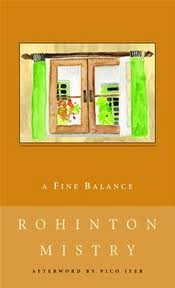
A Fine Balance by Rohinton Mistry
Set in Mumbai in the 1970s and ’80s, this novel follows four characters from across the caste system, each with different backstories, brought together under one roof. The novel shows how their life paths are affected by the turbulent economic and political changes in India. Tragedy is mixed with humour, and Mistry weaves Hindi vernacular into the dialogue so expertly it feels unlaboured. By the end of the book you feel as if you’ve lived in Mumbai yourself.


King Leopold’s Ghost by Adam Hochschild
A magnificent piece of non-fiction that details the brutal history of colonial rule in the Belgian Congo. Hothschild’s research goes into incredible economic and historical depth, listing the main players in almost novelistic detail. An eye-opener to the horrors of this episode in history.

The Great Gatsby by F. Scott Fitzgerald
This novel explores the iron fist of snobbery in American high society. Written in unbeatable prose, I love the way Fitzgerald lays bare the immorality and ugliness behind the ‘beautiful people’ of the Roaring Twenties society.

Cider House Rules by John Irving
Set in rural Maine, US, this book partly tackles the ambiguities of abortion as it follows the life of an orphan who becomes a doctor. A multi-stranded saga that spans decades, Irving’s humorous and non-didactic approach gently transports you until the pathos suddenly hits, towards the end.


Things Fall Apart by Chinua Achebe
I will never get tired of this book, and it will never stop being relevant. It brilliantly anatomises how Christianity and colonialism rocked traditional African society. In an age when Africa is still misunderstood by the wider world, this book will always be the gold standard in explaining how and why things become the way they are.


Noo Saro-Wiwa was born in Nigeria in 1976 and raised in England. She attended King's College London and Columbia University in New York and has written travel guides for Rough Guide and Lonely Planet. She currently lives in London. Looking for Transwonderland: Travels in Nigeria is her first book. 

Thursday, 2 August 2012

Guest Writer: Noo Saro-Wiwa

Noo Saro-Wiwa was born in Nigeria in 1976 and raised in England. She attended King's College London and Columbia University in New York and has written travel guides for Rough Guide and Lonely Planet. She currently lives in London.

Tuesday, 31 July 2012

GCLF 2012: Books of the Festival

Death and the King’s Horseman, by Wole Soyinka
Elesin Oba, the King's Horseman, has a single destiny. When the King dies, he must commit ritual suicide and lead his King's favorite horse and dog through the passage to the world of the ancestors. A British colonial officer, Pilkings, intervenes.

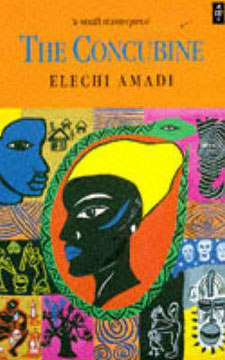
The Concubine, by Elechi Amadi
Ihuoma, a beautiful young widow of exemplary character, has the admiration of the entire community in which she lives, and especially of the hunter Ekwueme. Obedient to the expectations of the traditional society they belong to, they forswear their love so that Ekwueme can marry the girl to whom he has been betrothed since birth. But their passion is fated, and jealousy, a love portion and the closeness of the spirit world, lift this simple tale on a tragic plane.

The Spider King’s Daughter, by Chibundu Onuzo
Seventeen-year-old Abike Johnson is the favourite child of her wealthy father. She lives in a sprawling mansion in Lagos, protected by armed guards and ferried everywhere in a huge black jeep. A world away from Abike’s mansion, in the city’s slums, lives an eighteen-year-old hawker struggling to make sense of the world. His family lost everything after his father’s death and now he sells ice cream at the side of the road to support his mother and sister. When Abike buys ice cream from the hawker one afternoon, they strike up a tentative and unlikely romance. But as they grow closer, revelations from the past threaten their relationship and both Abike and the hawker must decide where their loyalties lie.

Transwonderland: Travels in Nigeria, by Noo Saro Wiwa
At its heart Noo Saro-Wiwa's Looking for Transwonderland: Travels in Nigeria is both a travel memoir and a search for closure. Noo Saro-Wiwa, the daughter of the world-renowned anti-corruption and environmental activist Ken Saro-Wiwa was brought up in England but regularly visited Nigeria every year, that was until her father was executed in 1995 by the military government of Sani Abacha. After her father's murder Noo Saro-Wiwa decided that she would rather not have anything more to do with Nigeria and stayed away from the country for 10 years. Looking for Transwonderland is Noo Saro-Wiwa's attempt to rediscover and come to terms with Nigeria, to connect with her family history and heritage through experiencing Nigeria's rich diversity and to understand its complexities.

Tropical Fish, by Doreen Baingana
Tropical Fish follows the three Mugisha sisters, as they grow up against the backdrop of Uganda in the 1980s. Patti is a born-again Christian; Rosa is adventurous and sexually precocious. The star of the show however is Christine. We travel with her as she takes her first wobbly steps in high heels and later encounters the alienation amidst material wealth of America, before her final return home.

The Blind Kingdom, by Véronique Tadjo
This multi-layered narrative comprises a series of interwoven short stories and poetic texts which can be read within continental Africa, the African Diaspora and beyond. Véronique Tadjo imagines an African society on the brink of total collapse, yet there is no doubt that the story resonates in unsettling ways with recent political and social unrest in Côte d´Ivoire. This is a lyrical and yet haunting story, a book of love with fresh insights into the unfinished and complex struggles for African independence. Tadjo envisions a new world where outrage and chaos — necessary for change — generate hope, creativity and renewal.

Joys of Motherhood, by Buchi Emecheta
Nnu Ego is a woman devoted to her children, giving them all her energy, all her worldly possessions, indeed, all her life to them -- with the result that she finds herself friendless and alone in middle age. This story of a young mother's struggles in 1950s Lagos is a powerful commentary on polygamy, patriarchy, and women's changing roles in urban Nigeria.

The Secret Lives of Baba Segi’s Wives, by Lola Shoneyin
The Secret Lives of Baba Segi’s Wives is a book that explores the dynamics of a polygamous home in urban (circa 2001) Ibadan in Nigeria. It is told with a dry wit, very satirical and earthy. A stirring tale of men and women, mothers and children, servitude and independence, Shoneyin's novel illuminates the common threads that connect the experiences of all women: the hardships they bear, their struggle to define themselves, and their fierce desire to protect those they love.

***These books may be the focus of the festival but there are many other titles available for sale at the book fair. You don't want to miss out on these treasures. Happy New Month readers!

Saturday, 28 July 2012

Call For Entries: The GCLF Writers' Workshop


Entries for the 5th edition of the annual Garden City Literary Festival Writers’ Workshop are now being accepted. The workshop will hold in October 2012.

The Writers’ Workshop is a creative platform where aspiring writers sit under the tutelage of their established counterparts. It is recommended for anyone who wants to improve their writing skills. Each applicant must indicate their preferred choice of workshop.

Application to more than one class will not be considered. Participants are required to submit samples of their writing (in line with requirement for the different genres) before Friday 31st August, 2012, to secure a place.

All applicants must submit the following:

FOR SHORT STORIES:
  • Sample short story of between 1000 and 1500 words (please highlight--in the subject of your email--how many words your story contains). You should submit only your best story.
FOR POEMS:
  • Sample poem (no longer than 1000 words). Please note: synopses or abstracts will NOT be accepted.
FOR DRAMA
  • A ‘one act’ play script on any subject.
PLEASE NOTE THAT THE FOLLOWING GUIDELINES MUST BE ADHERED TO:
  • A one-page personal CV must be submitted along with each entry;
  • A brief paragraph about what you intend to learn from your chosen workshop must be included in submission;
  • All manuscripts must be double spaced with a header showing ‘author’ to the left, ‘title’ in the middle and ‘page number’ to the right;
  • Handwritten entries or entries that do not adhere to the manuscript format above will not be accepted.
All sample materials must be submitted to info@gardencityfestival.com not later than 12 noon on Friday 31st August, 2012. Materials submitted after this date and time will not be accepted.

*Guest writers at the 5th edition of the Garden City Literary Festival include Doreen Baingana, Lola Shoneyin, Veronique Tadjo, Noo Saro-Wiwa, Chibundu Onuzo and the Caine Prize administrator, Lizzy Attree.