Thursday, 28 June 2012

Iheoma Nwachukwu: On PH World Book Capital Bid

The Adventure of Port Harcourt’s Bid to Become World Book Capital City

By Iheoma Nwachukwu


Peter Pan and Port Harcourt have one thing in common—Lewis Harcourt, for whom the city is named. In 1912, the year the city was christened, Lewis Harcourt, serving in H.H. Asquith’s cabinet, authorized the placement of the Peter Pan statue in London’s Kensington Gardens. He might as well have authorized the placement of the statue in Port Harcourt (or the placement of the Muse in Port Harcourt), because the qualities of adventure, diversity, and eternal youth that Peter Pan personalizes, that the Peter Pan story embodies, are attributes that have drawn migrants, and writers, to Port Harcourt for all of its hundred years.

Peter Pan
Port Harcourt’s bid to become the 2014 World Book Capital City then comes as little surprise for a city that shares a historical bond with probably the most popular, most exciting, most adapted character in children’s literature.

The World Book Capital City title, which began in 2001, is presented by UNESCO to a city with the best programme that promotes books and reading, and shows the most convincing dedication of all players in its local book industry.

The title runs from April 23 (UNESCO’s World Book and Copyright Day) to April 22 of the following year. Madrid won the incipient award; Yerevan in Armenia currently holds the 2012 award. Oxford (United Kingdom) and Pula (Croatia) are just two of the other cities Port Harcourt has to defeat for the 2014 title.

Port Harcourt, capital of Rivers state and Nigeria’s oil capital, seems the obvious choice for the 2014 title given the quality, variety, broad international scope, and commitment of all actors in the local book industry, evident in its World Book Capital City programme. First, the theme for the bid—Books: Window to Our World of Possibilities—evokes a potent image of the book, knowledge, as the lens through which we interpret and influence our world.

The Port Harcourt World Book Capital City programme proposes to begin with the performance of an inspiring theme song, performed by a popular Nigerian artiste, and written by a lucky youth whose work is chosen from a nationwide pool. Another slated activity is a national symposium which will assemble stakeholders in the book chain industry to discuss the future literacy and literary culture in Nigeria, and the importance of literature in unlocking the potentials of the country’s youth. The Rivers State Governor, Rotimi Amaechi, an avid reader who holds Bachelors and Masters degrees in English Literature, will lead this discussion.

Nigeria’s President, Dr. Goodluck Jonathan, will also be invited to read an excerpt from a classic Nigerian novel to children. The President recently led a national reading campaign named ‘Bring Back the Book,’ and his involvement will surely encourage more young people to read and write. Also expected to read to children at chosen locations across the city of Port Harcourt are authors, poets, and celebrities from film, music, sports, as well as the business communities.

Perhaps the greatest boon to Port-Harcourt’s bid is the Garden City Literary Festival, held yearly in Port Harcourt since 2008 by the Rainbow Book Club. The festival, which has seen attendance by writers like Wole Soyinka, Chinua Achebe, Ngugi Wa Thiong’O, and Ama Ata Aidoo, holds author readings, fiction and poetry workshops for emerging writers, writing, drama and arts workshops for children, book fairs, and many other activities over a five-day period. Thus, the World Book Capital City programme will gain from the experience of the administrators of the literary festival, since the Rainbow Book Club, which runs the festival, manages Port Harcourt’s bid, too.

Nigeria’s literary heritage is not in doubt; it has gifted the world legendary writers like Wole Soyinka, the first person of African descent to win the Nobel Prize for Literature; Chinua Achebe, author of Things Fall Apart, the most widely read book by an African; and other world-renowned writers such as Ken Saro-Wiwa, J. P. Clarke, Ben Okri, and Elechi Amadi.

Port Harcourt’s win will not only cast a fresh eye on Nigeria’s past achievements, but will also catalyze the intense literary scene (many successful young Nigerian writers like Chimamanda Ngozi Adichie, who runs a yearly workshop, and Port Harcourt-born Igoni Barrett, already inspire lots of Nigerians) and give Nigerian literature a helpful jab in the arm. In its own right, Port Harcourt has a rich literary pedigree, and has provided roof and Muse to writers for decades. For example, it is home to numerous authors, including the iconic novelist Elechi Amadi, the brilliant poet Gabriel Okara, as well as celebrated historians like Robin Horton and E. J. Alagoa. Also, Old Port Harcourt Town was a vibrant cultural centre in the 1970s, and provided entertainment and education through plays directed by the likes of Comish Ekiye with a distinguished cast that included actors Doye Agama, Barbara Soki, and Aso Douglas. Some of the famous early educational institutes in Nigeria such as the Okrika Grammar School, and the Archdeacon Crowther Memorial Girls Secondary School, also actively promoted literature in Port Harcourt.

The promotion of literature among the youth is one obvious impact of any literary programme, especially one overseen by UNESCO. The Garden City literary Festival is proof of this kind of impact. Dana Donubari, who attended one of the festival workshops in 2009, was inspired to publish a collection of poems titled Tears for Ogoni. Port Harcourt, which until recently experienced violent activity from militant youth demanding a fair share of Nigeria’s oil wealth, has the potential to change the lives of even more youth as a World Book Capital City—perhaps reach an ex-militant and inspire this youth to tell his story.

There is so much potential here, and UNESCO must know this, too. Port Harcourt looks ready to become World Book Capital City. This would be something of an adventure, a win that has potential to draw the adventure-boy himself, Peter Pan, to the fascinating coastal city of Port Harcourt. As well as draw the gaze of the entire globe.

The world can hardly wait.

Iheoma Nwachukwu is a creative writer. He has received fellowships from the Chinua Achebe Center for African Writers and Artists, Bard College, New York, and the Michener Center for Writers, University of Texas, Austin.

Sylva Ifedigbo: On the PH World Book Capital Bid

Books Are a Window to Our World of Possibilities: A Look at the Port Harcourt Bid for UNESCO World Book Capital City

By Sylva Nze Ifedigbo


Home to renowned writers such as Elechi Amadi, Gabriel Okara and Kaine Agary, Port Harcourt, Nigeria’s oil-rich city and capital of Rivers State, has announced its bid to be named the UNESCO World Book Capital City in 2014, a bid which will see it emerge as the first city in Sub-Saharan Africa to hold the enviable title.

Every year UNESCO convenes delegates from the International Publishers Association, the International Booksellers Federation, and the International Federation of Library Associations and Institutions to grant the title of UNESCO World Book Capital to one city. This city holds the title for one designated year, from 23 April (UNESCO World Book Day) until 22 April of the following year and undertakes to organize a series of enriching, educative and entertaining events around books, literature and reading. The title of World Book Capital is given to the city with the best programme dedicated to books and reading.

The Port Harcourt bid for this title—which is spearheaded by the Rainbow Book Club, organizers of the annual Garden City Literary Festival, in conjunction with the Rivers State Government—sees Port Harcourt pitched against cities like Oxford in the United Kingdom, Vilnius in Lithuania, Pula in Croatia and Yaoundé in Cameroon, the only other city from Africa. The title, which was launched in 2001 and is currently held by Ljubljana in Slovenia, has been held at various times in the past by Madrid, Alexandria, New Delhi, Montreal, Antwerp, Turin, Bogotá, Amsterdam, and Beirut, with Bangkok already announced as the chosen city for 2013.

The bid by Port Harcourt comes at a time when Nigeria is experiencing a literary revival with the rise of writers such as Sefi Atta (Winner of the Noma Award, 2009), Kaine Agary (NLNG Nigeria Prize for Literature, 2008) Chimamanda Ngozi Adichie (winner of the Orange Prize, 2007), Commonwealth Book Prize winners like Helon Habila, Uwem Akpan and Adaobi Tricia Nwaubani, Caine Prize Winner E.C Osondu, and a host of others who are blazing the trail globally.

Closely related to this is the increased focus on literary activities in the country. This commendable trend is highlighted by programmes such as the President Jonathan-initiated “Bring Back the Book” project, the Farafina annual creative writing workshop, and the Garden City Literary Festival. Also worthy of note is the institution of competitive literary prizes and awards such as the Caine Prize, the Wole Soyinka Prize, and the NLNG Nigeria Prize for Literature which at $100,000 stands as the most lucrative literary award in Africa.

The city of Port Harcourt, significant for its mix of cultures and its status as the hub of the oil-rich Niger Delta region, has come of age as a haven of culture and is fast making a name for itself as a major player on the global literary stage. Port Harcourt is also home to the annual Garden City Literary Festival. This festival is organized by Rainbow Book Club and has been described by Thisday Newspapers as “arguably the biggest event of its kind in sub-Saharan Africa.” The festival in its five years of existence has attracted such literary heavyweights as Kenya’s Ngugi wa Thiong’o, Ghana’s Ama Ata Aidoo and Nigeria’s Wole Soyinka, Chinua Achebe, J. P. Clark and Sefi Atta. Other guests of honour at the GCLF include dignitaries such as former Commonwealth Secretary-General Chief Emeka Anyaoku, as well as revered civil liberties activist Reverend Jesse Jackson.

It is to such earnest efforts in promoting literature that the award of the UNESCO World Book Capital title is sure to make the most impact. The status will contribute in no small way to maintaining the focus on literary activities in Nigeria. Furthermore, should its bid be successful, Port Harcourt will no doubt have a golden opportunity to build on the legacy of its literary history and culture to expand its role and influence on the continent.

One big plus for Port Harcourt’s bid is the endorsement and spirited support it enjoys from the government of Rivers State led by Rt. Honourable Rotimi Amaechi. The governor, a literary enthusiast, has committed to supporting a dynamic team composed of literary figures and leaders from the private sector, coordinated by the Rainbow Book Club, to drive the activities for the 2014 bid. This team includes such names as Noble Pepple, Ndidi Nwuneli, Anthony Epelle and A. Igoni Barrett, and it is chaired by Koko Kalango, founder of the Rainbow Book Club and Director of the Garden City Literary Festival.

As part of the bid process this committee has chosen the theme of “Books: Window to our World of Possibilities” to drive the 2014 activities in Port Harcourt. A rich itinerary of events is also planned to run through the World Book Capital year in Port Harcourt, including the opening of the multi-purpose Garden City Library Complex, drama performances, celebrity book reading sessions, a national symposium, and a host of other projects.

It is interesting to note that the 2014 bid by Port Harcourt coincides with the centenary celebration of Nigeria as we mark 100 years since the amalgamation of the Northern and Southern Protectorates by the British colonial government. It will be a befitting gift for the entire country if Port Harcourt were to become the World Book Capital at this time. Besides being a valid acknowledgement of the country’s rich literary heritage, it will also be a worthy template for emulation by other African countries in the promotion of reading, literature and the arts in general.

It is exciting that Port Harcourt is in contention for the World Book Capital and one must applaud the vision and forthrightness of the Rainbow Book Club and the Rivers State Government. As a major city in the literature-rich country of Nigeria, Port Harcourt will present unique opportunities for enhancing the idea of the “book” in the 21st century and its role as a window to a world of opportunities. This is one commendable effort that surely needs all the support it can get.

Sylva Nze Ifedigbo is a creative writer and communications practitioner who lives in Lagos, Nigeria.

Wednesday, 27 June 2012

Abubakar Adam Ibrahim: On Writing TWT


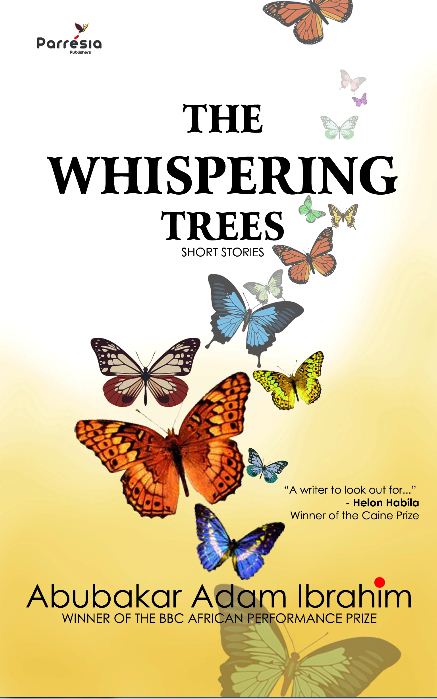
Abubakar Adam Ibrahim holds a degree in Mass Communication from the University of Jos, Jos, Nigeria. He has written for Vanguard, one of Nigeria’s foremost newspapers, and his short fiction has been published locally and internationally. In 2007 he won the BBC African Performance Playwriting Competition and his first novel, The Quest for Nina, is due out in 2008 in the United States. His latest work, The Whispering Trees was published by Parresia.

You see, I never quite set out deliberately to write my latest book, The Whispering Trees, because it never occurred to me that I would have a short story collection published at any point in my life.

And now, having gone through the process, I realise how completely different the writing process for a novel and a short story collection are. The novel is like childbirth – it begins with conception: the inspiration for the story, then the gestation period, in which you develop the plot and actually do the writing. The editing and revising process is quite akin to labour, I think.

A collection of short stories is quite different, as I discovered when putting together The Whispering Trees. Every single story is different. It has its setting and characters and plot and thematic concerns. You go through multiple miniature labour experiences to birth a single child, a single book, whose head may be of quite a different composition from the legs, but a child you will love all the same.

The twelve stories in The Whispering Trees were written in nearly a decade, during which my writing style evolved and took different forms, came under several influences, but the essence remained the same – the exploration of characters and plot and the philosophy of writing to communicate rather than to impress. I like having strong plots and I love having interesting characters to drive the plot to climax.

But whether writing a short story or a novel, the rudiments are essentially the same. First, the conception; that rousing moment when the inspiration comes, sometimes accompanied by pyrotechnics of iridescent lights floating in your head and making your heart beat faster. Sometimes it happens much in the same way as rainwater percolates into already damp earth.

This moment, for a committed writer, is always followed by the grunt work, the gestation period, if you like, where you crave solitude and exhibit some of those idiosyncrasies creative people are infamous for as you try to put your ideas into words. This is usually when even a lover’s voice sounds like an annoying intrusion into your thought process, the period when most people just don’t understand you.

In writing a novel, you go through this process only once, a long drawn out process that takes years sometimes, but once none the less. For my short story collection, I had to go through the process repeatedly, fortunately, I had about a decade to do so.

It started with the title story sometime in 2003, I think. Second year in the university, taking a borrowed course in creative writing, we were required to submit a short story to make the grade. And when I kept having flashes in my head of Faulata’s face tending to her fiancé, a final year medical student, who had just lost his sight in an accident, I knew I had to write about loss and purpose and finding self.

I didn’t have a PC then; I had no idea how to use a computer, so I wrote out the story in long hand and took it to this business centre where I had it typed. I went to proofread and for whatever reason, the typist forgot to save the changes and printed out an error laden work. I don’t blame her much. She wasn’t well schooled and for some really strange reason, she filled her head with other notions quite unrelated to the short story at hand. I could understand that, of course, so I wasn’t so mad, but it took me quite a while to completely extricate myself from the gooey web she was trying to catch me in.

So, I submitted the story and forgot about it completely and went on to the grander idea of writing a novel, my first. It took me some three years to complete that. But then an old course mate called and in the course of conversation asked me about that story I had written while in school. He said he couldn’t get it off his mind after all those years and urged me to do something about it.

So I did. I had got a laptop then so I retyped the story and sent it to a webzine where it was promptly published. I was elated and encouraged.

Writing short stories need a constant upsurge of motivation, which is quite distinct from inspiration, and I found that in the Jos ANA writing group I joined later. Every fortnight, there would be a reading and critique session and in order not to go there looking stupid, I challenged myself to write more short stories often. I pluck inspiration from the birds twittering in the trees, from the winds whispering in my ears and from the intrinsic flashes of some phrases, bits of dialogues, a scene. This is an anomaly that constantly plagues me and gives me headaches if I am too slow to pen these things down. In such instances, the story continues to flow from that point, like a flower sprouting from an inkwell. I had even had a dream once and woke up to write a short story base on it. That story went on to win a prize.

And because I simply can’t afford rewrites, I’m afraid I do not have the luxury of time and I really have an aversion for rewrites, I am usually painstaking in creating the first draft, crafting every sentence as meticulously as possible, linking them up to reach a climax. The most I would do when revising is to tweak some sentences here and there, perhaps, rearrange a paragraph or two.

Eventually, I had quite a stash of short stories and it took another writer friend to tell me I had more than enough for a short story collection. He strongly urged me to consider putting them together and give it a shot. I reluctantly agreed. So I took on the dreary task of filtering out the dozen stories to go into a collection. And that, more or less, was how The Whispering Trees was born.

Writing is a tough business. To be able to write, one must be able to wear the austere garb of solitude as comfortably as one would a sultan’s robe. One must learn also to be patient and tend to the story as one would a growing child – with much love and affection.

Abubakar Adam Ibrahim
Among the twelve, there was only one I had to rewrite. It took me two years working on that story. I suppose it had to do with the way the inspiration came – in spurts and jerks, paragraph by paragraph. Sometimes a sentence or two. It just refused to flow. In between, I wrote other things, of course. When it all came together eventually, I started rewriting from the beginning.

Sometimes others flow, and within days the story is done and dusted. It is like pregnancy, each one comes with its peculiarities, you see. Not that I’ve been pregnant before, of course.

But I suppose the most important thing when writing is to love what you are creating and to have fun writing it. Craft every phrase and sentence with love. Write to communicate and not to impress, I think it works better.

The chances are that if you put your heart into crafting a story, your readers will feel it and it will resonate with them. So if the story stream isn’t flowing, take a break, read a book, play some games, go out and relate with other people – apart from the ones in your story. If you force the story out, it will be contrived and God knows I don’t like reading such, and I know a lot of people who don’t.

Sometimes, writing pays, in mega bucks, and sometimes it doesn’t. Most times, it doesn't, actually. But nothing, absolutely nothing, compares to the satisfaction one feels of having crafted a wonderful tale that you hope will outlive you and confer on you that rarest of things – immortality.

Monday, 25 June 2012

A Bit of Difference: Sefi Atta's Latest Novel

Sefi Atta is the author of  the novels Swallow and Everything Good Will Come, and a collection of short stories, News from Home. She has been awarded the Wole Soyinka Prize for Literature and the NOMA Award. Sefi Atta was a guest author at the Garden City Literary Festival in 2010, and she said the following of her her experience there: "This literary Festival was the best I've ever attended."

On A Bit of Difference
In this interview on Publishers Weekly, she speaks about the opening of the novel: "I begin it with a short description of the poster of an African woman advertising a charity, and the rest of the novel is a profile of Deola, a young Nigerian woman who notices the poster at an airport. Her views are similar to mine: If the occasional stereotype is all she has to deal with as an African woman, then she is fortunate. I don’t set out to challenge Western perceptions of Africa, but I might by writing honestly."

Dialogue Series attempts a synopsis of the novel: At thirty-nine, Deola Bello, a Nigerian expatriate in London, is dissatisfied with being single and working overseas. Deola works as a financial reviewer for an international charity, and when her job takes her back to Nigeria in time for her father's five-year memorial service, she finds herself turning her scrutiny inward. In Nigeria, Deola encounters changes in her family and in the urban landscape of her home, and new acquaintances who offer unexpected possibilities. Deola's journey is as much about evading others' expectations to get to the heart of her frustration as it is about exposing the differences between foreign images of Africa and the realities of contemporary Nigerian life. Deola's urgent, incisive voice captivates and guides us through the intricate layers and vivid scenes of a life lived across continents. With Sefi Atta's characteristic boldness and vision, A Bit of Difference limns the complexities of our contemporary world.

Praise for A Bit of Difference
"Atta's splendid writing sizzles with wit and compassion. This is an immensely absorbing book." —Chika Unigwe, author of On Black Sisters Street

"Like Teju Cole’s Open City, Deola’s story is low on drama but rich in life, though Atta’s third-person voice makes less for a portrait of a mind in transit than a life caught in freeze-frame, pinned between two continents and radiating pathos. Wholly believable, especially in its nuanced approach to racial identity, the story feels extremely modern while excelling at the novelist’s traditional task: finding the common reality between strangers and rendering alien circumstances familiar" —Publisher's Weekly

Port Harcourt: the Future of Books

The Nigerian Presidency, UNESCO, the Rivers State government and literary enthusiasts, have thrown their weight behind the Rainbow Book Club bid for Port Harcourt to be the UNESCO World Book Capital City in 2014. Koko Kalango, chairperson of the Port Harcourt World Book Capital City Preparation Committee and Founder of the Rainbow Book Club formally launched the city’s candidature in a press conference held at the Secretariat of the Ministry of Education, Port Harcourt on Friday 15 June 2012. Mrs. Kalango posited that winning the contest portends a ‘…window to a world of opportunities’, which is incidentally the theme of the bid. Port Harcourt is vying alongside 10 other countries.

In her welcome note, the honorable Commissioner for Education, Dame Lawrence-Nemi, remarked that Governor Amaechi, in his effort to promote a reading culture in the state has made education free and compulsory, she also spoke of the partnership between the state and the Rainbow Book Club to organize the annual Garden City Literary Festival. 

Renowned author, poet and 1979 winner of the Commonwealth Prize for Poetry, Pa. Gabriel Okara, in an emotional appeal called on the UNESCO Director and Country Representative, to insist that Port Harcourt wins the bid as this will result in the harvest of more writers.

UNESCO Director and Country Representative, Dr. Joseph Ngu also commended the exercise. “The commitment on the part of the founder to bring back the book to our own door steps through such laudable projects as this bid is very encouraging” he said. He reiterated that the essence of the contest is the overall benefit of building a lively book culture. 

The Bring Back the Book Campaign was represented by Ms. Molara Wood,  who read a letter of support from, Mr Oronto Douglas, Assistant to the President on Strategy, in which he pointed out ‘...the many laudable activities of the Rainbow Book Club key in very strongly  into the citizen driven nature...’ of the President’s Bring Back the Book campaign.

Secretary General of PEN Nigeria, Oluwafiropo Ewenla captured the general mood of those present when in response to a question asked by a journalist, he asked ‘Why not Port Harcourt? Books have a present, past and future, this (Port Harcourt) is the future of books!’

Sunday, 24 June 2012

Oby Ezekwesili Reads to Ajegunle Pupils


Rainbow Book Club, celebrated the International Day of the African Child with a book reading at the Alakoto Senior High School, Ajegunle. Over 150 students from 13 schools participated in the reading. The message of ensuring a good education by developing a reading habit set the tone for the day and the children were thrilled to have one-time Minister for Education and former World Bank Vice-President Dr. (Mrs) Oby Ezekwesili read to them from Mai Nasara's The Missing Clock, the winning book for the NLNG-sponsored Nigeria Prize for Literature, 2011.

The school  principal, Mr. Titoni Ikhigbo said, in his address, that he believed that the mindset:  “can anything good come out of Israel (Ajegunle, the jungle city)? was put to rest with the visit of Ezekwesili, who herself attended a family-owned primary school in Ajegunle. The Ajegunle House of poetry engaged the guests to a soul stirring drama performance of Ajegunle Cannot Cry written by Daggar Tolar, Chairman, Association of Nigerian Authors, Lagos. One of the children also performed a rousing choreography of Infinity's "Olori Oko." 

Pupils relished the moment as they listened with rapt attention to Dr. Ezekwesili share her story, on her rise to fame. Drawing a moral from a line in the story; ‘though you start with little, you end with much,’ she enjoined the students to cultivate a reading habit: ‘‘I went to primary school here in Ajegunle. I really need you to know that you can be anything you aspire to be in this life. I want you to imagine that even though you are here today, you can rule the world. Develop a strong appetite for reading. When you read, you become superior mentally to your old self. When you read, you prepare yourself to become a success. You must plant something by reading."

Ezekwesili emphasised reading as the common denominator for a successful life. She responded heartily to every round of questions. She asked the students to take a cue from Banji the central character in the story who brought wealth and fame to his parents by an idea he got from planting. The students were made to understand that through reading, ideas are planted that would help them contribute towards nation building. She called on everyone to eschew corruption, become diligent and embrace hard work. "The best investment for you is to get the best education possible. Girl-child education is vital to building and development of the society. A literate woman makes the best choices for her children," she said.

Skye bank representative, Mr. Lekan Faleye, donated books to the students on behalf of the bank. Every child at the reading will have a lasting memory of this event as they had photo sessions with Ezekwesili in swift successions. She exited the classroom with a rapturous standing ovation. No doubt Ezekwesili's visit made a big impression on the students and the entire community. 

Report by Joel Cicero